
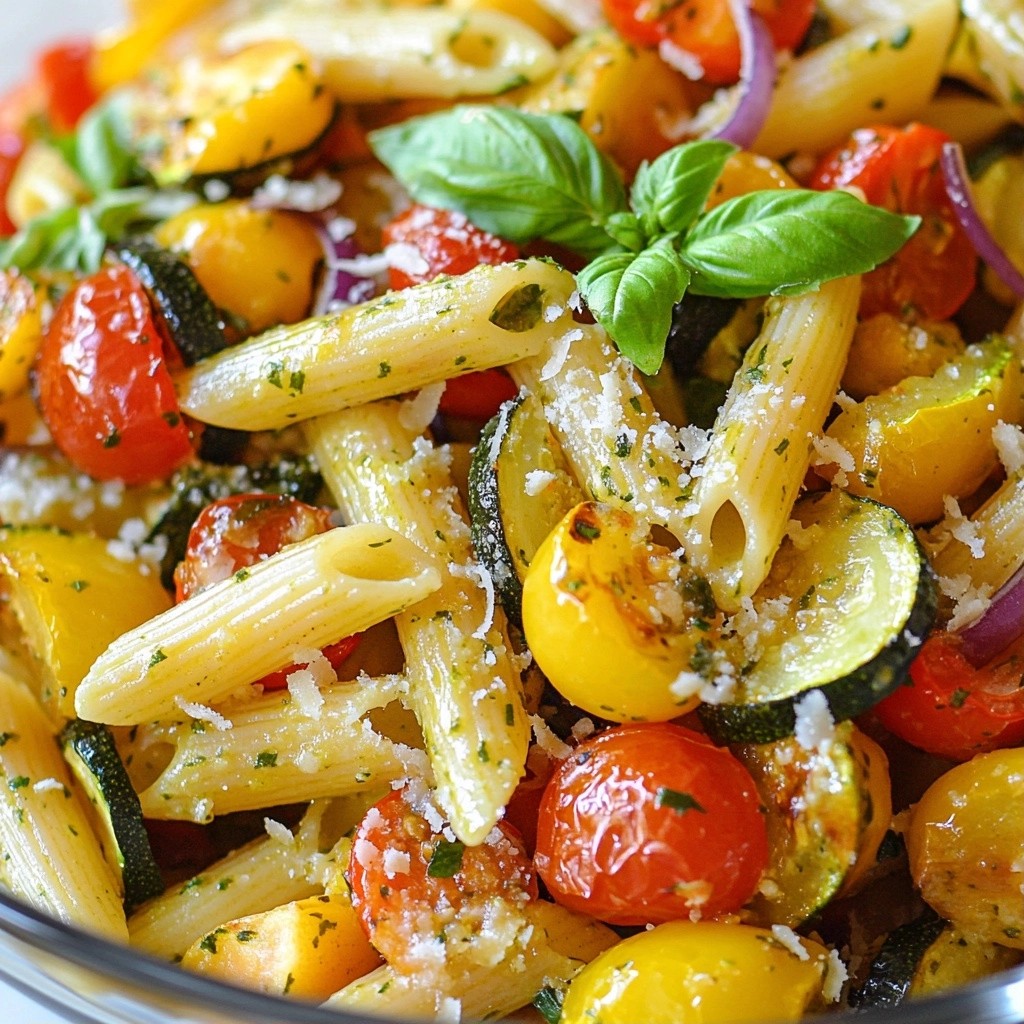
Are you craving a hearty meal that’s both tasty and easy to make? This Roasted Veggie Pasta Dish is the perfect solution! I’ll walk you through simple steps, fresh ingredients, and tasty tips to create a dish your family will love. Plus, you can adapt it to fit any diet! Let’s dive into this delicious copycat recipe that will fill your plate and your heart.
Why I Love This Recipe
- Healthful Ingredients: This dish is packed with wholesome veggies and whole wheat pasta, making it a nutritious choice for any meal.
- Easy Preparation: The straightforward steps and minimal prep time make this recipe perfect for busy weeknights.
- Customizable: You can easily swap out vegetables based on what you have on hand or your personal preferences.
- Delicious Flavor: The combination of roasted veggies and herbs creates a mouthwatering dish that everyone will love.
Ingredients
Whole Wheat Pasta Options
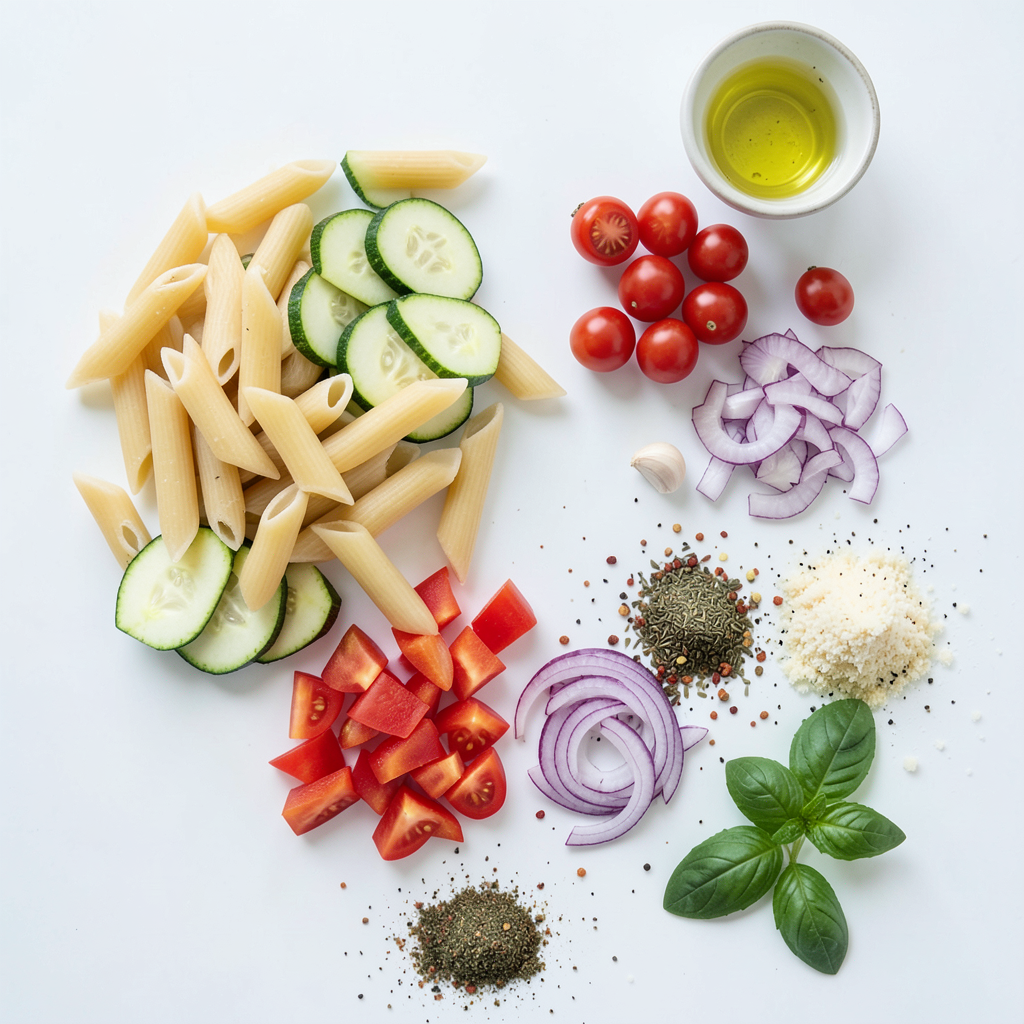
For this dish, I use 12 oz of whole wheat pasta. You can choose penne or fusilli. Whole wheat pasta adds fiber and nutrition, making your meal more filling. This pasta cooks well and holds sauce nicely.
Fresh Vegetables
Fresh veggies make this dish colorful and tasty. You need:
- 1 zucchini, sliced
- 1 bell pepper (any color), chopped
- 1 cup cherry tomatoes, halved
- 1 red onion, sliced
- 3 cloves garlic, minced
These vegetables add flavor and texture. Zucchini and bell pepper give crunch. Cherry tomatoes add sweetness. Red onion brings a bit of sharpness. Garlic adds a lovely aroma.
Seasonings and Oils
Seasonings bring the dish to life. I use:
- 2 tablespoons olive oil
- 1 teaspoon dried basil
- 1 teaspoon dried oregano
- ½ teaspoon red pepper flakes (optional)
- Salt and pepper to taste
- ¼ cup grated Parmesan cheese (or nutritional yeast for a vegan option)
Olive oil helps roast the veggies and adds richness. Basil and oregano give warm, herby notes. Red pepper flakes add heat if you like spice. The cheese or nutritional yeast adds a savory finish.
Fresh basil leaves are perfect for garnish and add a burst of flavor.
Step-by-Step Instructions
Preheating the Oven
First, set your oven to 400°F (200°C). This step is key for roasting the veggies. A hot oven helps them cook evenly. Preheating ensures they get that nice caramelized look and taste.
Preparing the Vegetables
Next, gather your veggies. You will need:
- 1 zucchini, sliced
- 1 bell pepper (any color), chopped
- 1 cup cherry tomatoes, halved
- 1 red onion, sliced
- 3 cloves garlic, minced
In a large bowl, mix the zucchini, bell pepper, cherry tomatoes, red onion, and garlic. Drizzle 2 tablespoons of olive oil over the veggies. Then, add your spices: 1 teaspoon dried basil, 1 teaspoon dried oregano, and ½ teaspoon red pepper flakes if you like some heat. Don't forget salt and pepper to taste. Toss everything until the veggies are well-coated with oil and spices.
Cooking the Pasta
While the veggies roast, cook 12 oz of whole wheat pasta. Use penne or fusilli for great texture. Follow the package instructions until the pasta is al dente, then drain it. Set the pasta aside.
After about 25-30 minutes, check your veggies. They should be tender and slightly caramelized. Combine the roasted veggies with the cooked pasta in a large bowl. Sprinkle ¼ cup of grated Parmesan cheese or nutritional yeast for a vegan option. Toss gently to mix everything. Taste and adjust the seasoning if needed. Serve warm, garnished with fresh basil leaves for a lovely touch.
Tips & Tricks
How to Roast Vegetables Perfectly
Roasting veggies brings out their best flavors. First, cut the vegetables into even pieces. This helps them cook at the same rate. Use a high oven temperature, like 400°F (200°C). This temperature helps the veggies caramelize. Spread them out on a single layer on the baking sheet. Overcrowding can make them steam instead of roast.
Enhancing Flavor Combinations
To boost taste, use fresh herbs like basil. Mix in spices like garlic and red pepper flakes. Olive oil adds richness and depth. Try different combinations of veggies. Bell peppers and zucchini work well together. Cherry tomatoes add sweetness. You can use any veggies you like. Just keep the flavors balanced.
Adjusting for Dietary Preferences
This dish is easy to adapt. For gluten-free eaters, swap whole wheat pasta for gluten-free options. If you want it vegan, switch Parmesan cheese with nutritional yeast. You can also skip cheese for a lighter dish. Make sure to taste as you go. Adjust the seasonings to fit your needs. This way, everyone can enjoy the meal!
Pro Tips
- Use Seasonal Vegetables: Opt for seasonal veggies to enhance flavor and freshness in your pasta dish.
- Al Dente Pasta: Cook your pasta just until al dente to achieve the perfect texture that holds up with the roasted veggies.
- Experiment with Herbs: Feel free to mix in fresh herbs like thyme or rosemary for an extra layer of flavor.
- Make it Ahead: Roast the veggies and cook the pasta in advance, then combine them right before serving for an easy weeknight meal.
Variations
Gluten-Free Options
You can easily make this dish gluten-free. Simply swap whole wheat pasta for gluten-free pasta. Look for brands made from brown rice or chickpeas. These options have great taste and texture. Always check the package for cooking times, as they can vary.
Plant-Based Alternatives
For a plant-based meal, replace Parmesan cheese with nutritional yeast. It adds a cheesy flavor without dairy. You can also toss in some plant-based protein like chickpeas or lentils. This will make your pasta even more filling.
Different Vegetable Combinations
Feel free to mix and match veggies! Try adding carrots, broccoli, or asparagus. Each vegetable brings its own flavor and texture. Use what you have on hand. Roasting brings out the natural sweetness in all veggies. This dish is all about creativity and fun!
Storage Info
How to Store Leftovers
After you finish your hearty roasted veggie pasta, let it cool. Place it in an airtight container. This keeps your dish fresh for up to three days in the fridge. Label the container with the date. This way, you won't forget when you made it.
Reheating Recommendations
When you're ready to enjoy leftovers, heat them gently. You can use a microwave or a skillet. If using a microwave, cover the dish to keep moisture in. Heat for 1-2 minutes, stirring halfway through. If you use a skillet, add a splash of water or olive oil to keep it moist. Stir for about 5 minutes over medium heat. This helps revive the flavors and warmth.
Freezing Instructions
If you want to save your pasta for later, freezing is a great option. First, let the dish cool completely. Portion the pasta into freezer-safe bags or containers. Try to remove as much air as possible to prevent freezer burn. Label each bag with the date. You can freeze this pasta for up to three months. When you're ready to eat, thaw it overnight in the fridge. Then, reheat as mentioned above.
FAQs
Can I use other types of pasta?
Yes, you can use any pasta you like. Try gluten-free pasta for a different twist. You might enjoy bowtie or spaghetti for a fun shape. Just make sure to adjust the cooking time to keep it al dente. Cook the pasta as the package says. This will help you get the best texture.
What are the best vegetables for roasting?
Many veggies roast well. I love using zucchini, bell peppers, and cherry tomatoes. They become sweet and tender. Other great options include broccoli, carrots, and eggplant. Feel free to mix and match your favorites. Just cut them into similar sizes for even cooking.
How can I make this dish vegan?
To make this dish vegan, skip the cheese. Use nutritional yeast instead of Parmesan. It adds a cheesy flavor without dairy. You can also add more veggies for extra taste. Try adding mushrooms or spinach for a nice twist. This keeps the dish tasty and plant-based.
This blog post covered how to make a tasty pasta dish. We discussed ingredients like whole wheat pasta, fresh veggies, and seasonings. I shared step-by-step instructions, from preheating the oven to cooking the pasta. You learned tips for roasting vegetables and flavor tricks. We explored variations, including gluten-free and plant-based options. Lastly, I explained how to store and reheat leftovers.
With these insights, you now have the tools to create a delicious meal fit for everyone. Enjoy cooking!